Streatham High Road shop rubbish removal for businesses
Posted on 03/09/2026
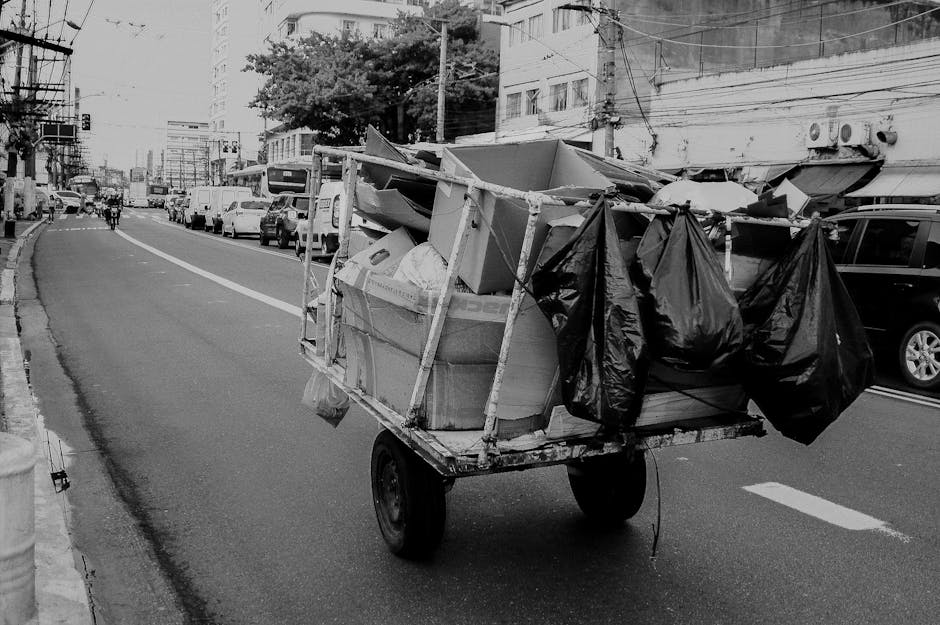
If you run a shop on or near Streatham High Road, rubbish builds up in a way that can feel oddly relentless. One delivery, one refit, one busy weekend, and suddenly there are cardboard stacks, broken display items, old shelving, packaging straps, and the awkward stuff nobody wants to think about. Streatham High Road shop rubbish removal for businesses is the practical answer to all of that: a reliable way to clear commercial waste quickly, keep the premises presentable, and stop waste from getting in the way of trading.
For local businesses, this is not just about "getting rid of junk". It is about shopfloor safety, customer experience, staff efficiency, and staying on top of obligations that are easy to ignore until they become a problem. In this guide, you will find a clear explanation of how shop waste removal works, when it makes sense, what to avoid, and how to choose a method that suits your operation. To make it easier to navigate, here is a quick contents list.
Why Streatham High Road shop rubbish removal for businesses matters
High street retail runs on presentation. Customers notice the shopfront before they notice the stock, and they notice clutter faster than you might think. A bag of flattened boxes beside the till, a leaking bin out back, or old promotional displays wedged into a storeroom can make a business feel less organised, even if the service is excellent.
On Streatham High Road, that matters even more because many shops work in compact spaces, with limited storage and narrow service areas. Waste can quickly block access routes, crowd emergency exits, or make back-of-house work awkward. And let's face it, nobody wants staff stepping over broken packaging at 8:45 in the morning before opening.
Good shop rubbish removal is also about momentum. When waste is cleared regularly, a business can reset its space, prepare for deliveries, make room for new stock, and avoid that "everything is temporary" feeling that messy storage creates. You will notice the difference in energy straight away. The place feels lighter. Easier.
There is also a customer-facing angle. A tidy frontage and clean rear access area can help reassure shoppers that the business is well run. That might sound small, but in retail small signals matter. People trust what looks cared for.
If you are also improving a premises, downsizing, or changing layout, this often sits alongside broader commercial clearance work. In those cases, it can help to understand how the wider process works through the services overview and, where relevant, more specific support such as office clearance in Streatham or furniture disposal in Streatham.
Expert summary: For shops on Streatham High Road, rubbish removal is not a back-office nuisance. It is part of presentation, safety, and day-to-day trading discipline. If waste is getting in the way of customers or staff, it is already costing you something.
How Streatham High Road shop rubbish removal for businesses works
The process is usually more straightforward than people expect. In most cases, a business identifies what needs removing, chooses a collection option, books a suitable time, and has the waste taken away by a team that can load it efficiently and dispose of it properly. That said, the smoothest jobs always start with a bit of planning.
A typical commercial shop clearance or rubbish collection might include some combination of:
- cardboard and packaging from deliveries
- old shop fittings and display units
- damaged stock or unsellable items
- broken shelves, hangers, racks, or POS materials
- backroom clutter and redundant storage items
- general mixed waste from a refurbishment or seasonal reset
The best approach depends on volume, access, and timing. A small pile of flat-pack packaging is one thing. A full shop refit with timber, shelving, and heavy display pieces is another. If a business is dealing with construction debris during a fit-out or a repair, it may also be appropriate to look at builders waste disposal in Streatham.
What happens on the day? Usually, a team arrives, assesses the load, separates what can be handled safely, and removes it. For business owners, the real value is speed and certainty. You do not need to hire a skip and guard it, you do not need staff to make repeated tip runs, and you do not need to turn your stockroom into a temporary waste depot. Nice, simple, done.
Of course, timing matters. Shop waste removal often works best before opening, after closing, or during a quieter midweek window. On a busy high street, even a small delay can mess with foot traffic, staff movement, or delivery schedules. One badly timed clearance can feel bigger than the waste itself.
Key benefits and practical advantages
When business owners think about rubbish removal, they usually start with the obvious benefit: a clean space. Fair enough. But there are several other practical advantages that are easy to overlook until they become the reason the service is worth paying for.
1. Better shop presentation
A tidy retail environment supports customer confidence. This applies whether you sell clothing, food, gifts, stationery, electronics, or something more specialist. A clear shopfront, uncluttered stockroom, and properly managed waste area all contribute to a more professional impression.
2. Improved staff workflow
Employees work better when they are not constantly moving waste around or trying to find space for empty boxes and dead stock. Clear paths and organised storage areas make restocking quicker and reduce frustration. That sounds small, but over a week it adds up.
3. Less safety risk
Loose packaging, broken fixtures, and overfilled bins can create trip hazards and handling issues. Some waste is awkward rather than dangerous, but "awkward" turns into "unsafe" surprisingly fast. Removing clutter promptly helps maintain a safer working environment for staff and visitors.
4. Faster turnarounds after deliveries or refurbishments
Retail moves at pace. Seasonal stock changes, window updates, and refits all produce waste at speed. Reliable rubbish removal helps businesses keep pace without waiting for a random quiet day that never quite appears.
5. More efficient use of space
Backroom space in high street shops is always at a premium. If waste is hanging around too long, it steals storage capacity you could be using for actual stock. That alone is reason enough for many owners to treat waste removal as a routine operational task rather than a one-off fix.
6. Better compliance habits
Commercial waste must be handled carefully. Good removal routines make it easier to separate materials, avoid contamination, and keep records or paperwork organised where needed. It is one of those boring-but-useful habits that protects the business later.
Who this is for and when it makes sense
This service is relevant to a wide range of businesses, not just traditional shops. If you operate on Streatham High Road or nearby and generate regular customer-facing or back-of-house waste, it is worth considering.
It is particularly useful for:
- independent retailers
- charity shops
- barbers and salons
- cafes and takeaway businesses with rear storage waste
- phone, tech, or repair shops
- convenience stores and off-licences
- boutiques and fashion stores
- businesses undergoing a stock reset or seasonal clearance
- premises preparing for a change of use, refit, or handover
Sometimes the need is obvious: a pile of obsolete fixtures, a full stockroom, or a refit deadline. Other times it is more gradual. The bin area is becoming harder to manage, cardboard is building up faster than collections can handle, or old equipment is lingering in the corner "for now". To be fair, "for now" has a habit of becoming six months.
If your business is moving from one layout to another, or if you are clearing out old furniture and storage units as part of a wider reset, a broader clearance service may be helpful too. In some cases, it is worth comparing the needs of shop waste with house clearance in Streatham or even a more general waste collection in Streatham model, because the right solution depends on the type of material and the scale of the job.
Step-by-step guidance
If you want this to run smoothly, the best approach is to treat rubbish removal like a mini project. Nothing dramatic. Just structured enough that the job does not spiral.
- Identify the waste stream. Separate cardboard, packaging, fixtures, furniture, mixed waste, and anything that may need special handling. This makes the job faster and helps avoid confusion on collection day.
- Estimate the volume. You do not need a perfect calculation, but you should know whether the waste is one small corner of the shop or a full van load plus a bit. A rough visual estimate is often enough to begin with.
- Check access. Think about loading doors, stairwells, parking, rear lanes, and whether the job will affect customers or deliveries. On a busy high street, access planning is half the battle.
- Choose a suitable time. Early mornings, late evenings, or quieter trading windows are often best. If a collection might interrupt trade, it is worth scheduling around your slowest period.
- Prepare the waste area. Put loose items together, flatten cardboard where practical, and make sure hazardous or sensitive items are identified. This saves time and reduces the chance of mistakes.
- Confirm what should stay and what should go. This sounds obvious, but mixed store rooms create confusion. Label items if needed. A simple "keep" and "remove" split can save a lot of back-and-forth.
- Arrange a clear handover. Make sure the person on site knows which items are included, where the waste is located, and who can approve any last-minute changes.
- Review the cleared area afterwards. Once the waste is gone, check for spillages, loose fixings, or anything missed behind shelving. A five-minute sweep can prevent another mess.
The easiest jobs are the ones where everyone knows the plan in advance. Not glamorous, but effective. And honestly, effective is the point.
Expert tips for better results
Over time, shop waste removal becomes much easier when it is handled with a few simple habits.
Keep a small waste strategy all year round
Do not wait until the stockroom is bursting. Set a routine for cardboard, packaging, damaged items, and out-of-season stock. A little regular discipline prevents the messy all-at-once scramble.
Separate reusable items early
Some fixtures, shelving, hangers, and display pieces can be reused, donated, or repurposed. If they are mixed into general waste, that decision becomes harder and slower. A quick sort can save money and reduce waste.
Think about the customer experience during collection
If collection is happening while you are open, try to keep the visible impact low. Customers may forgive a busy workspace, but they do not love stepping around bags or hearing heavy items being dragged past the till.
Use a simple inventory note for larger clearances
For bigger jobs, list the main categories of items being removed. It helps with internal sign-off, tenancy handovers, and post-job checks. Nothing fancy. A spreadsheet or even a printed list is often enough.
Plan for the "hidden waste"
Every shop has it: the old signs, the broken umbrella stand, the drawer of dead cables, the box of display parts that nobody claims. Hidden waste is where clearances get messy. Take the time to walk the premises properly.
A small practical note here: if your business also cares about waste handling and recycling choices, it is worth reading the site's recycling and sustainability information. It helps frame waste removal as part of a wider responsible business routine, not just a one-off clean-out.

Common mistakes to avoid
Most problems with commercial rubbish removal are not dramatic. They are ordinary mistakes that add friction. The good news is they are avoidable.
- Leaving waste until it blocks work. Once rubbish affects movement, the job becomes harder and more expensive in time.
- Mixing all materials together. Cardboard, metal shelving, timber, and general waste are not always best treated as one heap. A little sorting helps.
- Forgetting access constraints. A van cannot magically appear where there is no loading space. Worth checking.
- Underestimating the volume. That "small pile" often turns into three piles and a backroom surprise.
- Scheduling at the wrong time. If your busiest hour is 12:30 on a Saturday, that is probably not the time for a clearance.
- Ignoring paperwork or business records. Keep notes of what was removed and when. It is just good housekeeping.
- Assuming all waste is the same. Some items are straightforward, others need careful handling. Ask questions before collection day if you are unsure.
One mistake that deserves a separate mention: asking staff to improvise a solution every time waste builds up. It feels cheap, but over a few months it can become quite expensive in lost time, clutter, and low morale. People get tired of stepping around problems. Quite understandably.
Tools, resources and recommendations
You do not need a warehouse management system to keep shop waste under control. A few simple tools and habits usually do the job.
- Colour-coded bags or labels for different waste types
- A basic inventory sheet for fixtures, stock, and items set aside for disposal
- A clear storage zone for flattened cardboard or removable waste
- Gloves and appropriate handling equipment for staff moving small items
- A calendar reminder for routine clear-outs, especially before seasonal changes
- A photo log for larger waste areas before and after removal
For businesses that are also refreshing interiors, display units, or front-of-house layouts, it can help to coordinate waste removal with furniture disposal rather than treating each item separately. The same applies if you are clearing more than one area at once and want the whole process to feel coherent.
If you are looking for a broader picture of available help, the about us page and the pricing and quotes page can be useful starting points for understanding how a professional service is structured and how costs are typically approached. That sort of clarity helps business owners make a calm decision instead of a rushed one.

Law, compliance, standards, and best practice
Commercial waste handling in the UK should be taken seriously. Businesses have responsibilities around how waste is stored, transferred, and handed over, and it is sensible to follow accepted good practice even when a job seems small. The exact obligations can depend on the type of waste involved, but the core principle is straightforward: waste should be managed safely, responsibly, and by a suitable route.
For shop owners, that usually means a few practical standards.
- Do not leave waste where it can obstruct entrances, exits, or customer walkways.
- Keep waste separate where segregation is sensible and practical.
- Use a provider or method that can handle the waste lawfully and safely.
- Keep basic records or notes for business traceability.
- Take extra care with any items that may be sharp, heavy, contaminated, or confidential.
Safety matters too. If waste removal involves heavy lifting, awkward fixtures, broken glass, or confined access, it is better to slow down and plan properly than to rush and regret it. A rushed job in a narrow shop backroom can go wrong very quickly, and nobody wants that at 7:30 on a damp Tuesday morning.
Businesses also benefit from checking whether their clearance partner has sensible processes for safety, insurance, and payment. You can read more about this through insurance and safety and payment and security. Those pages help reassure owners who want a straightforward, accountable service rather than a vague promise.
Best practice in this area is not about perfection. It is about consistency, clarity, and avoiding avoidable risk. That is usually enough.
Options, methods, and comparison table
Different businesses need different waste removal methods. A compact fashion shop clearing packaging after a delivery wave will not need the same approach as a store removing old counters and shelving during a refit. Here is a simple comparison to help you think it through.
| Option | Best for | Strengths | Limitations |
|---|---|---|---|
| Regular small collections | Ongoing shop waste, packaging, cardboard | Simple, low disruption, good for routine control | May not suit larger clearance jobs |
| One-off commercial clearance | Refits, stockroom resets, seasonal changes | Fast, convenient, clears multiple waste types in one go | Needs planning and clear access |
| Skip-style approach | Longer projects with predictable waste volumes | Useful if waste accumulates over time | Can be awkward on busy high streets and may occupy space |
| Specialist removal for bulky items | Fixtures, shelving, large furniture, display units | Suitable for heavy or awkward items | May need a more detailed survey of access and handling needs |
For a lot of Streatham High Road businesses, the sweet spot is a flexible clearance arranged around trading hours. It keeps disruption low and avoids the "waste mountain" effect that can happen when collections are too infrequent. If you are comparing services, think about the end result you want, not just the quickest way to make things disappear.
Case study or real-world example
Picture a small independent shop on Streatham High Road after a seasonal stock change. The back room is full of flattened cardboard, a few broken display pieces, old signage, and a shelving unit that has finally seen its last day. The front of the store is fine, but every time staff restock, they have to edge around the clutter. It slows everything down a bit, then a bit more, then suddenly everyone is fed up.
The owner decides to arrange a dedicated rubbish removal rather than asking staff to handle it piecemeal. Before the collection, the team groups waste into clear piles: packaging, bulky fixtures, and mixed general waste. They also move a few reusable items aside for later review. The collection is scheduled before opening, so customers never see the mess at its worst.
After the clearance, the back room feels noticeably different. Not just "tidier" in a surface sense, but workable again. Staff can reach stock without squeezing past old boxes. The new display setup starts properly. There is room to breathe, which sounds odd, but you really do feel it in a small retail space.
This kind of job is not unusual. In fact, it is one of the most common reasons businesses in busy London high streets use commercial rubbish removal. The value is not dramatic. It is practical. And practical wins the day.
Practical checklist
Use this checklist before booking shop rubbish removal for your business:
- Identify all items that need removing
- Separate reusable, recyclable, and general waste where possible
- Check access points, loading space, and any time restrictions
- Decide whether the job needs a one-off clearance or a repeat collection
- Prepare the waste area so items are easy to load
- Make sure staff know what is staying and what is going
- Set a suitable collection time around trading hours
- Confirm any bulky, heavy, or awkward items in advance
- Keep a note of what has been removed for your records
- Inspect the cleared area afterwards for missed items or hazards
If you can tick most of those off, the job usually goes smoothly. Not glamorous. Just efficient.
Conclusion
Streatham High Road shop rubbish removal for businesses is about much more than clearing a pile of waste. It helps keep shops safe, presentable, and operationally tidy in a setting where space is tight and first impressions matter. Whether you are dealing with day-to-day packaging, a seasonal reset, or a full shop clearance, the right approach saves time and reduces stress.
The main idea is simple: do not let waste dictate how your business feels or functions. Put a routine in place, choose the right removal method, and plan around trading hours where possible. Once the clutter is gone, everything else tends to run a little better. Customers notice. Staff notice. You notice.
Get a free quote today and see how much you can save.
And if you are still deciding, that is fine too. A thoughtful clean-out is one of those quiet business decisions that pays back in steadier days, calmer mornings, and a shop that feels ready for the next customer walking through the door.
 Tipper Van - Rubbish Removal and Waste Collection Prices in Streatham, SW16
 Luton Van - Rubbish Removal and Waste Collection Prices in Streatham, SW16


